
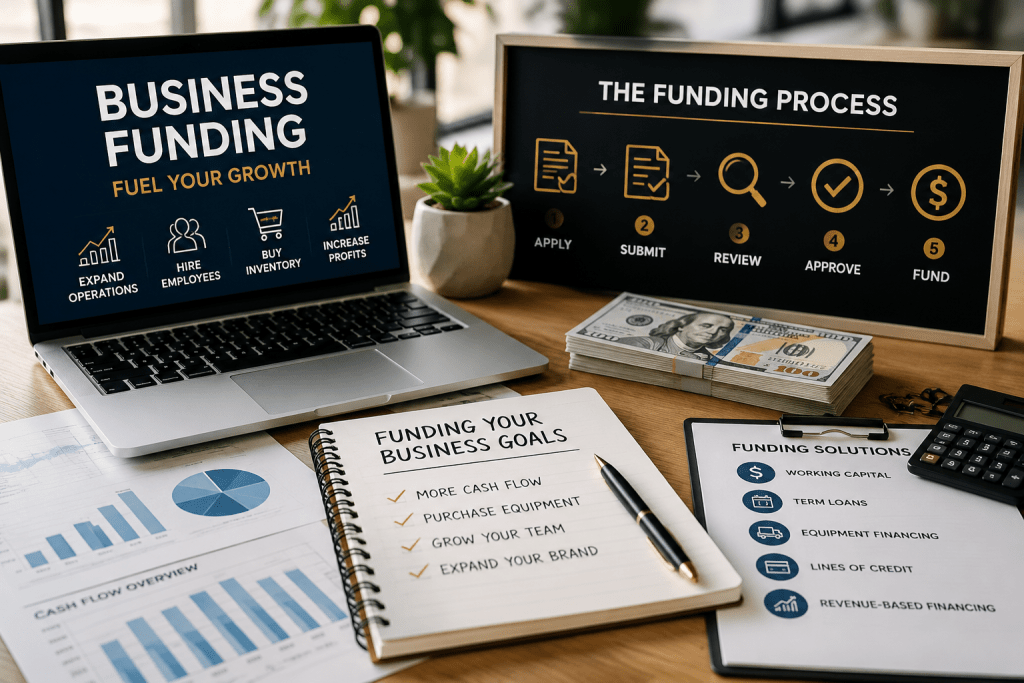
Understanding how business funding works starts with a clear need and a realistic repayment plan. Choose a suitable source of capital, complete the provider’s review and read the written terms. The main steps are budgeting, preparing records, comparing products, applying, reviewing the agreement and managing repayment.
Scrumptious Enterprises LLC is a veteran-owned business serving entrepreneurs nationwide. Use this guide to prepare questions and understand the process before committing to financing.
1. Define the amount and purpose
Explain what the money will pay for, when it is needed and how the business expects to repay it. Separate a one-time purchase from a recurring operating shortfall. Borrowing may address a timing gap, but it does not fix an ongoing loss without operational changes.
Use quotes, invoices and a cash forecast to support your estimate. Include fees and a reasonable contingency, and test what happens if sales arrive later than expected.
2. Compare business funding types
| Option | Common purpose | Key review point |
|---|---|---|
| Term financing | A defined project or purchase | Total repayment and payment schedule |
| Business line of credit | Eligible recurring cash needs | Draw rules, interest and fees |
| Equipment financing or leasing | Specific productive assets | Ownership and end-of-term terms |
| Working capital financing | Operating cash requirements | Whether payments fit expected receipts |
| SBA-backed loan | Eligible uses under a specific program | Lender and program requirements |
Product names alone do not establish cost or suitability. Read about equipment financing versus leasing and working capital before choosing a path.
3. Check eligibility before applying
Providers may consider revenue, cash flow, credit, operating history, industry, debt and collateral. A new business with no revenue may need a different approach from an established company with regular deposits.
For example, SBA 7(a) loans involve participating lenders and program eligibility requirements. SBA backing does not create automatic approval or remove the borrower’s obligation to repay.
Ask about current requirements, credit inquiries and personal guarantees. Our credit score guide explains why there is no universal score that determines every funding decision.
4. Prepare accurate records
- Business identity and ownership details as requested.
- Recent bank statements and financial reports.
- A list of existing debts and payment dates.
- The amount needed and its intended use.
- Purchase quotes, contracts or invoices where relevant.
- A cash forecast that includes a slower-sales case.
Requirements vary. Submit sensitive records through a verified provider’s appropriate process, keep copies and respond accurately to follow-up questions. Do not alter statements or omit existing obligations to improve an application.
5. Compare the written offer
Identify the amount approved, deductions, net proceeds, total repayment and payment frequency. Review collateral, guarantees, default terms and early-payment rules. Ask whether quoted costs include every mandatory fee.
An interest rate, factor rate and annual percentage rate describe different things. Ask the provider to explain the calculation and full dollar cost. A lower periodic payment can reflect a longer term and higher overall cost.
6. Confirm funding and manage repayment
A preliminary indication is not a final approval or proof that money has been disbursed. Confirm conditions and the actual funding date before making commitments to suppliers.
After receiving funds, track spending against the plan and set payment reminders. Reconcile statements and review cash flow regularly. If a payment problem develops, contact the provider promptly and review the agreement.
How business funding works in a practical example
Imagine an owner needs equipment for confirmed work. The first task is to obtain a complete quote and estimate when the new work will produce cash. Next, compare the payment with existing bills. If delivery is delayed, the business still needs a way to meet its commitments. Keep a slower-start scenario beside the main forecast.
For the next step, check the full equipment purchase cost and prepare the application records.
Frequently asked questions
How long does business funding take?
Timing varies by product, provider, documentation and underwriting. Ask for a realistic estimate and identify outstanding conditions.
Does applying guarantee an offer?
No. An application starts a review. Approval, amount and terms depend on eligibility and underwriting.
Can I compare offers before signing?
Yes. Request written terms and take time to understand cost, obligations and suitability before accepting.
Is a calculator result a commitment?
No. Our funding calculator is an educational estimate, not an approval.
Prepare for a productive discussion
Explore business funding services or schedule a discussion. Bring your purpose, budget and records. This guide is educational and does not replace individualized financial, legal or tax advice.